
DIY Website Builder vs Hiring a Professional Developer: Which Saves You More in the Long Run?
Starting a website today feels deceptively simple. Pick a template, drag a few blocks around, add your logo, and hit publish. Within an hour, you have something live on the internet. But here’s the question most business owners don’t ask until months later: does a cheap website today end up costing more tomorrow?
The choice between a DIY website builder and hiring a professional developer isn’t just about upfront price. It’s about performance, scalability, security, and how much of your own time gets eaten up along the way. This guide breaks down both options honestly, so you can decide based on your actual business needs, not just the sticker price.
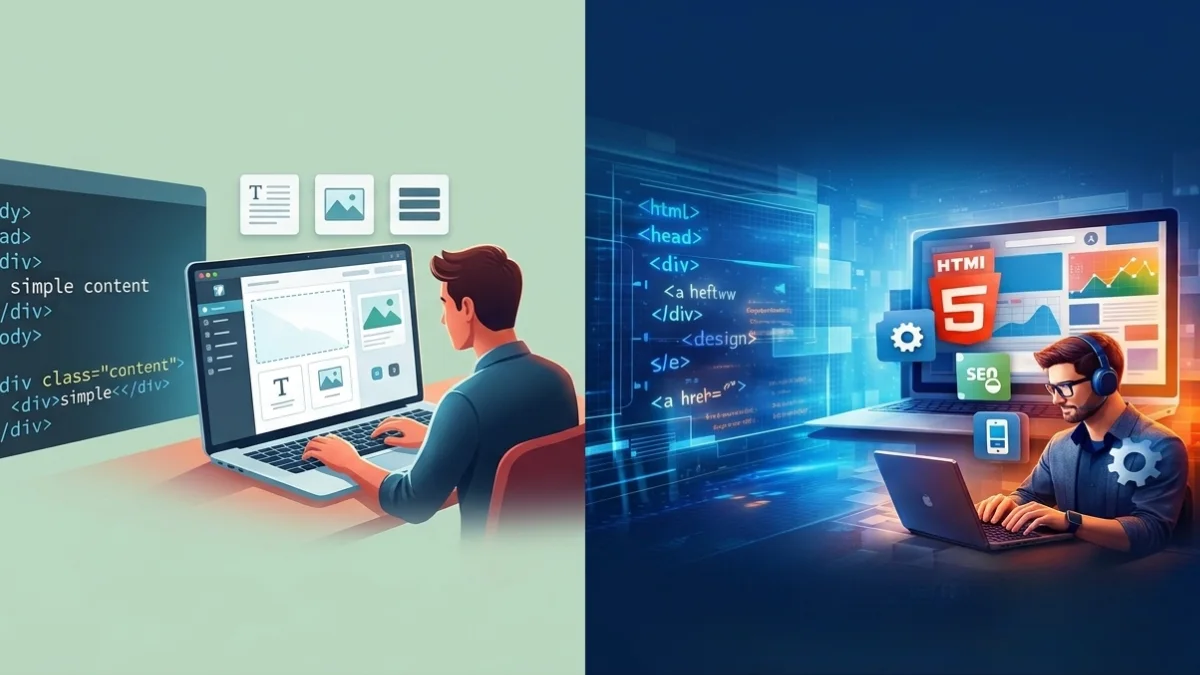
Quick Answer
If you need a simple website fast, on a tight budget, and don’t expect major growth or custom features, a DIY builder is the smarter short-term choice. If you’re building a business that depends on your website for revenue, brand trust, or long-term growth, hiring a professional developer usually saves more money over 2-3 years, even though it costs more upfront. The real deciding factor isn’t budget alone – it’s how much your website needs to do for your business.
Understanding the Two Paths
What Is a DIY Website Builder?
DIY builders like Wix, Squarespace, Shopify, and WordPress (with page builders) let anyone create a website without writing code. You choose a template, customize it with a visual editor, and publish. Monthly plans typically range from $10 to $50, making it an attractive entry point for freelancers, small shops, and hobby projects.
What Does Hiring a Professional Developer Mean?
A professional developer builds your website from the ground up or heavily customizes an existing framework to match your specific business goals. This includes custom design, performance optimization, security hardening, integrations with tools like CRMs or payment gateways, and ongoing technical support. Costs can range anywhere from a few hundred dollars for a small business site to several thousand for a complex platform.
Cost Comparison: What You Pay vs What You Actually Get
The DIY Builder Cost Structure
At first glance, DIY builders look like the obvious money-saver. You’re paying a monthly subscription instead of a large one-time fee. But several hidden costs tend to appear over time:
- Premium plugins and add-ons – Basic plans often lack essential features like advanced SEO tools, forms, or booking systems, pushing you toward paid upgrades.
- Template limitations – Popular templates are used by thousands of other businesses, which can make your site look generic and less trustworthy to visitors.
- Your own time – Every hour you spend fiddling with layouts, fixing broken elements, or learning the platform is an hour not spent running your business.
- Migration costs – If you outgrow the platform later, moving your content, SEO rankings, and design to a new system can be expensive and technically messy.
The Professional Developer Cost Structure
Hiring a developer involves a higher initial investment, but the cost structure is usually more predictable long-term:
- One-time build cost – Once built, the site is yours; there’s no dependency on a builder’s subscription tiers.
- Custom functionality built once – Features like multi-language support, custom checkout flows, or API integrations are built to your exact specification, avoiding plugin patchwork.
- Lower long-term maintenance surprises – A developer who understands your codebase can fix issues faster and prevent conflicts that DIY plugin stacks often create.
- Scalability without rebuilding – As your business grows, a professionally built site can be extended rather than replaced.
Performance and User Experience: The Silent Revenue Factor
Website speed and design quality directly affect conversions. Studies on user behavior consistently show that visitors abandon slow-loading pages within seconds. DIY builders, because they’re designed for ease of use across millions of websites, often carry unnecessary code bloat that slows load times.
A professional developer can strip away anything unnecessary, optimize images and scripts, and build a site that loads fast on both desktop and mobile. This isn’t a minor technical detail – a one-second delay in load time can measurably reduce conversions, especially for e-commerce sites.
SEO and Visibility: Why This Matters More in 2026
Search behavior has changed. It’s no longer just about ranking on Google’s traditional results page. In 2026, visibility also depends on how well your content performs across AI-powered answer engines and generative search tools like ChatGPT, Perplexity, and Google’s AI Overviews. This is where Answer Engine Optimization (AEO) and Generative Engine Optimization (GEO) come in.
DIY builders offer basic SEO settings – meta titles, descriptions, alt tags – but they rarely give you control over deeper technical factors like structured data (schema markup), clean URL architecture, or crawl efficiency. These technical elements matter because AI-driven engines rely heavily on structured, well-organized content to understand and cite a page.
A professional developer can implement:
- Custom schema markup so search and AI engines understand your content context accurately
- Clean, semantic HTML that improves both traditional SEO and machine readability
- Faster technical performance, which search engines increasingly reward
- Content structured for direct-answer formats, improving chances of appearing in AI-generated summaries
If your business depends on being found online – whether through Google search or AI assistants recommending businesses – this technical foundation matters more than most business owners realize.
Security and Long-Term Reliability
Website security isn’t optional anymore. DIY platforms handle basic hosting security, but if you’re using third-party plugins or themes, vulnerabilities can still creep in. A single security breach can mean lost customer trust, data leaks, or even search engine penalties.
Professional developers typically build with security best practices from day one – secure coding standards, regular updates, and monitoring systems. They also tend to catch small issues before they become expensive emergencies, something a template-based builder simply isn’t designed to do.
When DIY Builders Make Complete Sense
To be fair, DIY builders aren’t a bad choice for everyone. They work well when:
- You’re testing a business idea and need a website fast, without heavy investment
- Your website is a simple portfolio, blog, or informational page
- You have basic design and tech comfort and enjoy managing it yourself
- Budget constraints genuinely don’t allow for a custom build right now
In these cases, a DIY builder can absolutely be the smarter short-term financial decision.
When Hiring a Developer Pays Off
On the other hand, hiring a professional developer tends to save more money in the long run when:
- Your website is central to revenue generation (e-commerce, lead generation, bookings)
- You expect to scale features, traffic, or product lines within 1-2 years
- Brand perception and trust are critical to your industry
- You need integrations with other business tools (CRM, inventory, payment systems)
- SEO and AI-search visibility are core to your growth strategy
For businesses in this category, many local entrepreneurs specifically search for a reliable and best web designer or a trusted freelance web developer in Kerala to get a site built with both regional market understanding and long-term technical scalability in mind – a combination DIY builders simply can’t replicate.
A Simple Way to Decide
Ask yourself these three questions:
- Will my website need to grow significantly in the next 2 years? If yes, lean toward a developer.
- Does my revenue directly depend on website performance and trust? If yes, lean toward a developer.
- Am I mainly testing an idea or need something simple and fast? If yes, DIY is a reasonable starting point.
There’s also a hybrid approach worth considering: start with a DIY builder to validate your idea, then transition to a professionally built site once you have traction and clearer requirements. Many successful businesses follow this path intentionally.
FAQ's
Is a DIY website builder good enough for a small business?
Yes, for very simple needs like a basic portfolio or informational site. However, if your business relies on the website for sales or lead generation, a custom-built site usually performs better long-term.
How much does it cost to hire a professional web developer?
Costs vary widely based on complexity, ranging from a few hundred dollars for a simple business site to several thousand for advanced e-commerce or custom platforms.
Do DIY website builders hurt SEO?
Not directly, but they often lack advanced technical SEO controls like custom schema markup or deep code optimization, which can limit long-term search and AI-search visibility.
Can I switch from a DIY builder to a custom website later?
Yes, but migration can involve extra cost and technical work to preserve your SEO rankings, content, and design consistency.
Which option is more secure, DIY builders or custom development?
Custom-developed websites are generally more secure when built by an experienced developer, since security measures are tailored to the site rather than relying on generic platform-wide protections.
Is it worth hiring a developer for a small startup?
If the website will play a central role in your revenue or brand credibility, yes. If it’s a simple test or early-stage idea, a DIY builder may be sufficient initially.
How long does it take to build a website with a developer versus a DIY builder?
DIY builders can go live within hours or days. A professionally developed website typically takes a few weeks to a few months, depending on complexity.
Are DIY website builders bad for e-commerce businesses?
Not necessarily, but as product catalogs and traffic grow, custom development often provides better performance, checkout customization, and integration flexibility.
What is AEO and why does it matter for my website?
AEO (Answer Engine Optimization) focuses on structuring content so AI-powered search tools can understand and directly answer user queries using your website’s information, increasingly important as search shifts beyond traditional results pages.
Can a DIY website rank well on Google?
Yes, DIY websites can rank well with good content and basic SEO practices, though achieving top-tier rankings for competitive keywords often requires deeper technical optimization.
Should I hire a local developer or work with a freelancer online?
Both can work well. Many business owners prefer hiring locally, such as a webdesigner in Kerala or a specialized website developer in Kerala, for easier communication and better understanding of the local market.
What ongoing costs come with a professionally developed website?
Typical ongoing costs include hosting, domain renewal, security updates, and occasional maintenance, usually lower and more predictable than accumulating premium plugin fees on DIY platforms.
Is WordPress considered DIY or professional development?
WordPress can be both. Used with basic page builders, it functions like a DIY platform. When customized by a developer with custom code, it becomes a professional-grade solution.
What happens if my DIY website builder shuts down or changes pricing?
This is a real risk with DIY platforms, since your website depends entirely on their infrastructure and policies. Custom-developed websites give you more ownership and control over hosting and codebase.
Which option is better for long-term business growth?
For businesses expecting significant growth, custom development generally provides a stronger foundation, though starting with a DIY builder and transitioning later is also a valid strategy.
Final Verdict
Neither option is universally “better.” A DIY website builder saves money upfront and suits simple, low-stakes projects. A professional developer costs more initially but tends to save significantly more over time for businesses that depend on their website for growth, credibility, and search visibility – especially as SEO and AI-driven search continue evolving in 2026 and beyond.
The real question isn’t “which is cheaper” – it’s “which one supports where my business is going.” Answer that honestly, and the right choice becomes clear.